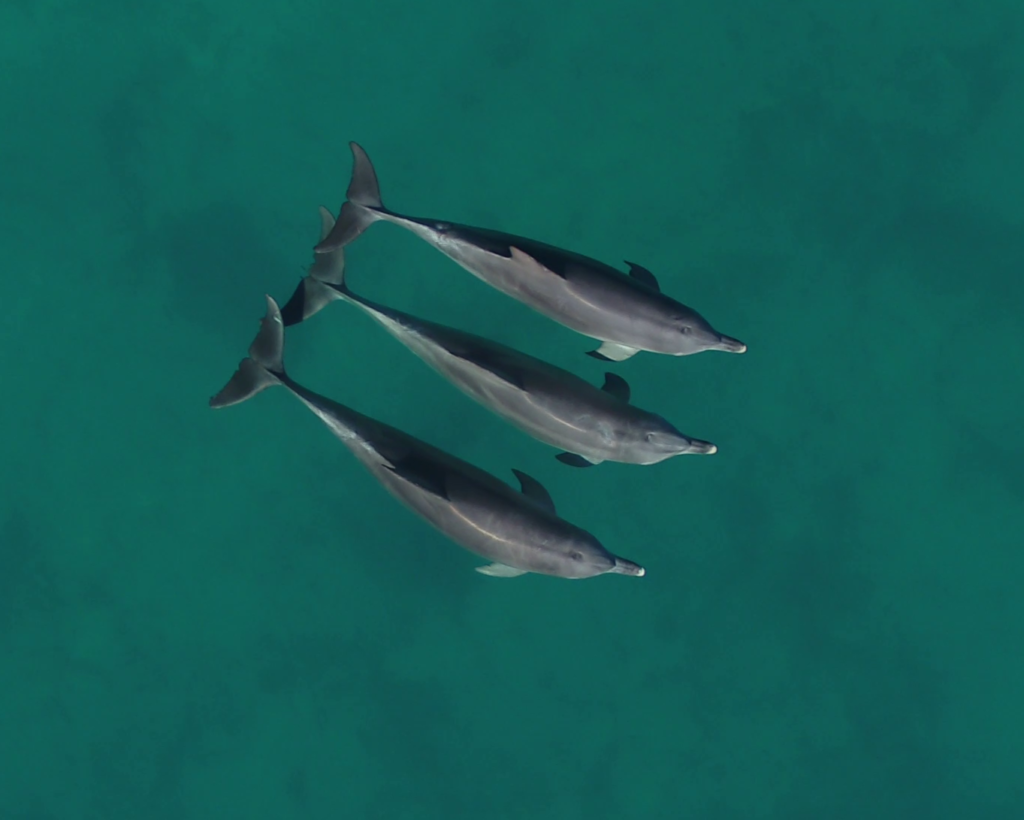
Dolphins
We study wild Bottlenose Dolphins in Shark Bay, Western Australia, using a rare long-term, individual-based approach: dolphins are recognized by natural markings on their dorsal fins, so we can follow known individuals and families across decades. This lets us ask big questions about intelligence, learning and social life in the open ocean, how dolphins form friendships and alliances, how mothers shape calves’ skills, and why some animals adopt highly specialized foraging tactics.
One focus is “sponging,” where some dolphins carry marine sponges on their beaks to protect them while hunting hidden fish on the seafloor. Our work helped show that this is not a fixed genetic “trait” but a socially learned tradition passed mainly from mother to offspring, one of the clearest examples of animal culture in the wild. We also combine behaviour with DNA, eDNA, remote sensing and habitat modeling to link social lives to reproductive success, ageing, and social complexity.
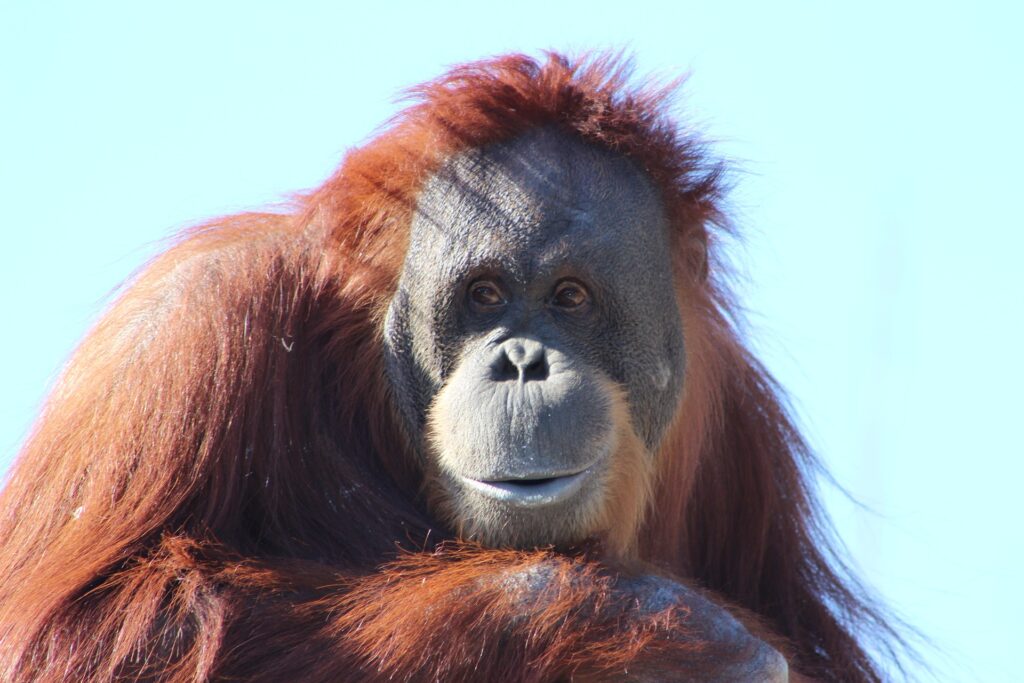
Orang-Utan
We work on Orang-Utans to understand how ecology, learning and evolution interact in one of our closest living relatives. By comparing many populations across Borneo and Sumatra, we have tested why Orang-Utans differ so much from place to place, what is shaped by habitat and food, what reflects local “traditions,” and what cannot be explained by genetics alone. This work speaks directly to the origins of culture, cognition and behavioural flexibility in great apes (and, by extension, in humans).
A second pillar is conservation genomics: using genome dat, we aim to reconstruct Orang-Utan history, identify distinct populations, and quantify isolation and loss of diversity as forests are fragmented.
Using this approach, we were instrumental in the discovery of the Tapanuli Orang-Utan (Pongo tapanuliensis) as a third, highly threatened species. Our work continues to inform where protection and connectivity matter most. In parallel, genome-wide studies help pinpoint how different Orang-Utan lineages have adapted to different environments—useful science when you’re trying to keep species viable in rapidly changing landscapes.